Pet walk
Top Tropical Fish for Aquariums
With so many tropical fish available, it can be tricky to know which ones to add and which ones to handle carefully. Here’s a guide to some of the most beginner-friendly species, as well as a few that require extra caution.
Elias Rowan
Lane guide
Guide note
The full walk continues under soft neon below.
Route
Tokyo Pet Guide
With so many tropical fish available, it can be tricky to know which ones to add and which ones to handle carefully. Here’s a guide to some of the most beginner-friendly species, as well as a few that require extra caution.
Top Tropical Fish for Beginners
1. Zebra Danio
Zebra danios (Danio rerio) are among the toughest tropical fish you can keep. They tolerate a wide range of water conditions—hard or soft, still or flowing, warm or unheated—making them perfect for beginners. Small and fast, they may not be the most colorful, but they are highly resistant to disease. Keep at least five in a 30-liter (or 45 cm) tank, feeding them flake food and insect larvae. Gold, long-finned, and leopard variations are also available.
2. Rosy Barb
Rosy barbs (Puntius conchonius) are active and hardy, similar to tropical goldfish. Males develop pink hues while females remain yellowish. These barbs adapt well to unheated tanks and various water conditions. They’re generally peaceful, though they may chase each other during spawning. Long-finned varieties are available as well.
3. Platy
Platies (Xiphophorus maculatus) are livebearers, meaning they give birth to live young rather than laying eggs. They are hardier than guppies, smaller than swordtails, and don’t require salt in the water like mollies. Platies come in a wide range of colors and are beginner-friendly.
4. Corydoras Catfish
Cory catfish are small, peaceful fish from South America that thrive in groups of three or more. They scavenge the tank bottom for food but require sinking pellets and clean gravel to protect their sensitive barbels. They mix well with tetras and other community fish in tanks 60 cm or longer.
5. Bristlenose Catfish
Bristlenose catfish (Ancistrus spp.) are small algae eaters that are easy to care for and breed. They stay manageable in size and do well alone, in pairs, or in groups. Recommended for tanks 75 cm or longer.
6. Kribensis
Kribensis (Pelvicachromis pulcher) are small cichlids that do well in pairs and enjoy having a cave to claim as their own. They are generally peaceful with small fish and excellent parents if they breed, guiding their fry around the tank. Provide one pair per tank and suitable conditions for breeding.
7. Harlequin Rasbora
Harlequins (Trigonostigma heteromorpha) are peaceful schooling fish from Southeast Asia. They swim in midwater, are hardy, and slightly larger than neon tetras, making them less prone to predation. Keep them in groups for best results.
8. Cherry Barb
Cherry barbs (Puntius titteya) are small, calm barbs perfect for beginners and community tanks. Males turn bright red and are hardy. They prefer to swim near the tank bottom and rarely nip fins.
Tropical Fish to Add with Care
1. Angelfish
Angelfish (Pterophyllum scalare) are popular for their shape and elegance, but they grow large and can be territorial. They may prey on smaller fish like neon tetras. Suitable for bigger community tanks but need monitoring.
2. Neon Tetra
Neons (Paracheirodon innesi) are small, striking fish with bright blue stripes and red tails. They require mature tanks and should be kept with peaceful companions. Avoid adding them to new tanks or with large, aggressive species.
3. Tiger Barb
Tiger barbs (Puntigrus tetrazona) are beautiful but can be aggressive in smaller numbers, often nipping fins of long-finned fish. Keep them in schools of at least 12 and pair with robust fish like rainbowfish or other barbs.
4. Clown Loach
Clown loaches (Chromobotia macracanthus) are large, lively fish that grow quickly, making them unsuitable for small tanks. They prefer groups and need a long-term commitment, as well as a diet of meaty sinking foods like bloodworms or mussels.
5. Siamese Fighter
Betta fish (Betta splendens) are famous for their vibrant fins and aggressive behavior. They should be housed alone in a tank with gentle water flow and floating plants. Never place them in a busy community tank.
Once your aquarium is set up, consider adding decorations or occasional treats to help your fish feel at home and adjust smoothly to their new environment.
Nearby walks
Lane · en

Learn More About Banana Leaf
Banana leaves play an important role in many traditional tropical Asian cuisines and are valued for their versatility in cooking and food presentation.
Lane · en

Mango Juice: A Rich Source of Antioxidants and Three Additional Health Advantages
Mangoes are beloved globally, and their liquid form—mango juice—also deserves attention.
Lane · en

Kyoto’s Hidden Autumn Wonderland
Kyoto is a captivating destination throughout the year, but the city becomes especially magical during the autumn season. As the leaves turn brilliant shades of red, orange, and gold, visitors from around the world gather at Kyoto’s famous sightseeing spots to admire the seasonal scenery.
Lane · en
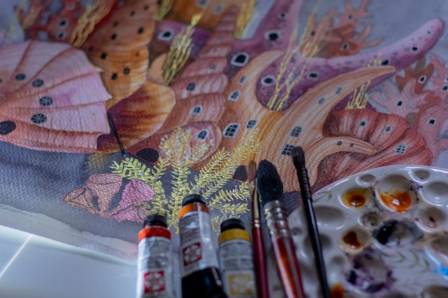
How to Draw Underwater Scenes with Various Media
Exploring underwater scenes in art can be both magical and challenging. The aquatic world is full of vibrant colors, intricate shapes, and captivating light patterns, making it an inspiring subject for artists. To create a believable underwater illustration, you’ll need to consider composition, light, depth, and which plants and animals will populate your scene. Preparing your workspace and gathering the right tools is also essential.
Lane · en

Healthy snacks for adults
Everyone’s snacking habits are different. The amount of food, types of snacks, and timing can vary depending on many personal factors, such as age, lifestyle, physical activity, cultural background, and individual food preferences.
Lane · en

Why is Sunrise So Colorful?
Have you ever stopped to think about why the sky can display such vivid colors at sunrise and sunset? Or wondered why the sky appears blue for most of the day? The explanation lies in the way visible light interacts with the atmosphere surrounding our planet.