Pet walk
Kyoto’s Hidden Autumn Wonderland
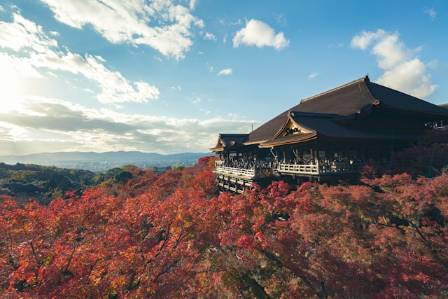
Kyoto is a captivating destination throughout the year, but the city becomes especially magical during the autumn season. As the leaves turn brilliant shades of red, orange, and gold, visitors from around the world gather at Kyoto’s famous sightseeing spots to admire the seasonal scenery.
Vincent Crawford
Lane guide
Guide note
The full walk continues under soft neon below.
Route
Tokyo Pet Guide
Kyoto is a captivating destination throughout the year, but the city becomes especially magical during the autumn season. As the leaves turn brilliant shades of red, orange, and gold, visitors from around the world gather at Kyoto’s famous sightseeing spots to admire the seasonal scenery.
Among the many beautiful locations in Kyoto, Rurikoin Temple remains a relatively lesser-known destination compared with major attractions, although its popularity has grown rapidly in recent years thanks to social media. The autumn colors at Rurikoin are truly spectacular, attracting large crowds during peak foliage season. The entrance line can sometimes extend for several hours, but the breathtaking scenery inside makes the wait worthwhile and offers visitors an unforgettable fall experience.
About Rurikoin Temple
Rurikoin Temple is situated at the foot of Mount Hiei in an area known as Yase. This region has a long history and was the location of a major conflict known as the Jinshin War during the 7th century. The battle occurred after the death of Emperor Tenji and became one of the most significant struggles in ancient Japanese history.
The conflict involved two groups supporting different candidates for the imperial throne: Prince Otomo and Prince Oama. Prince Oama eventually won the battle and became emperor. According to tradition, his wounds from the war were healed in the hot springs of Yase, leading the area to become associated with peace, healing, and tranquility.
The Gardens of Rurikoin Temple
The present buildings of Rurikoin Temple were constructed during the early Showa era, between 1926 and 1989. Within the temple grounds are three beautiful gardens, each with its own unique character.
The most famous is Ruri-no-Niwa, or the Ruri Garden, which is admired for its lush green moss-covered landscape. The harmony between the carefully designed garden, traditional architecture, and surrounding nature creates a peaceful atmosphere that represents the beauty of Japanese garden design.
Seasonal Opening of Rurikoin Temple
For many years, Rurikoin Temple was carefully preserved as a cultural property and was not open to ordinary visitors. Since 2015, however, the temple has welcomed guests during limited periods in spring and autumn.
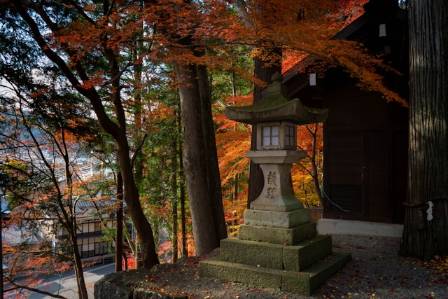
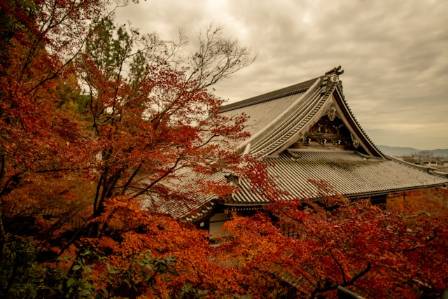
During spring, visitors can enter in May and June to enjoy fresh greenery. In autumn, the temple opens from October through December, allowing guests to experience the breathtaking maple leaves that surround the temple grounds.
The Famous Autumn Reflections at Rurikoin
Rurikoin became widely recognized after photographs of its extraordinary scenery spread across social media platforms. The most iconic view comes from the second floor of the temple, where a traditional study room offers a remarkable perspective.
The polished wooden table in this room reflects the colorful autumn leaves outside, creating a dreamlike scene that appears almost like a painting. This magical reflection has become known as the “dreamlike autumn foliage” view of Rurikoin.
Many visitors come specifically to capture this famous image, and the waiting time can become quite long during the peak season. For the best photographs, placing a camera directly on the table allows the reflection of the maple trees to be captured clearly.
Autumn Colors Reflected on the Wooden Floor
The temple’s beautifully polished floors also create stunning mirror-like reflections of the surrounding autumn foliage. The repeated images of vibrant maple leaves enhance the peaceful and artistic feeling of the temple.
These natural reflections add another layer of beauty to Rurikoin, making the autumn experience feel even more immersive.
Special Nighttime Illuminations at Rurikoin Temple
During certain periods in late autumn, Rurikoin Temple offers a rare nighttime viewing experience. Normally closed after dark, the temple opens for special evening visits between November and December with advance reservations required.
Only a limited number of visitors are allowed each day, creating a quieter and more relaxed atmosphere compared with the busy daytime season. Under the soft evening lighting, the autumn leaves take on an entirely different appearance.
The nearby walking path, Yase Momiji no Komichi, is also illuminated during this period. In addition, the Hiei Cable Car extends its operating hours between the base and summit of Mount Hiei, allowing visitors to enjoy both the glowing temple and the nighttime scenery of Kyoto from above.
Experience Buddhist Meditation Through Shakyo
Near the famous reflection area, visitors can participate in shakyo, the traditional Buddhist practice of copying sutras by hand.
Sutra copying has long been used as a form of meditation in Buddhism, helping practitioners focus their thoughts and achieve a sense of calm. At Rurikoin Temple, anyone can try this experience, and all necessary materials are provided.
For many visitors, shakyo offers a peaceful moment of reflection beyond simply viewing the autumn scenery.
Enjoy Matcha Tea Overlooking the Ruri Garden
Rurikoin Temple features three gardens: Ruri-no-Niwa, Garyo-no-Niwa, and Yamaroji-no-Niwa. Among them, Ruri-no-Niwa is the most famous and is the garden that inspired the temple’s name.
The entire garden floor is covered with vibrant green moss, creating a serene landscape that changes beautifully with the seasons. On the first floor of the temple, visitors can enjoy traditional matcha tea while looking out over this remarkable garden.
The seating area is available only for guests who order tea, providing a quiet opportunity to appreciate the scenery. A serving of matcha with a traditional sweet costs ¥1,000, while tea alone is ¥800.
Sipping Japanese green tea while admiring the peaceful Ruri Garden is one of the most memorable experiences available at Rurikoin Temple.
Nearby walks
Lane · en

Soar with Ease: A Beginners Guide to Paragliding
Have you ever dreamed of gliding effortlessly above mountains, valleys, and coastlines while enjoying breathtaking views from the sky? Paragliding offers exactly that—an exciting adventure that combines freedom, exploration, and the thrill of flight.
Lane · en
The Enduring Enigma of the Great Sphinx of Giza
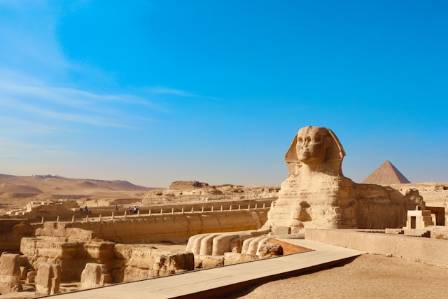
Standing guard on the Giza Plateau for millennia, the Great Sphinx remains one of history’s most iconic and mysterious monuments. With the body of a lion and the head of a human, this colossal statue has captivated explorers, scholars, and travelers for centuries. Who built it, when, and why? Despite extensive research, many questions about the Sphinx remain unanswered, fueling endless fascination and debate.
Lane · en
Go with the Flow: Rivers and Streams
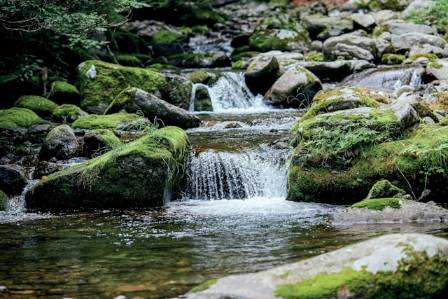
Naturally formed freshwater systems, including lakes, rivers, and streams, are interconnected through complex and constantly changing networks. Freshwater lakes are generally stationary water bodies enclosed by land, while rivers are flowing waterways that move through defined channels and eventually connect with larger aquatic systems. Streams also contain moving water and often combine with other streams to create larger waterways. A classification system is used to organize streams within watersheds based on their position and connections. For example, a stream located at the highest point of a watershed is considered a first-order stream, and when two first-order streams join, they create a second-order stream (Agriculture and Agri-Food Canada [AAFC], 2020).
Lane · en

Best Sailboats for Watching Sunsets at Sea
For decades, SAIL magazine's experts have spent months inspecting new sailboats, culminating in their annual selection of standout models. This year, they've moved beyond restrictive categories like "Best Cruising Monohull" to simply choose the Top 10 boats that represent the finest achievements in sailing - regardless of size or specific purpose. This new approach ensures truly exceptional boats receive the recognition they deserve.
Lane · en

The Ultimate Guide to Off-Road Vehicles
Off-road driving demands vehicles that are purpose-built to tackle rough and unpredictable terrain. These machines are designed to handle challenging surfaces like sand, mud, snow, and rocky paths, thanks to features such as extended suspension travel and rugged all-terrain tires. Below is an overview of different off-road vehicle types and what makes each one unique.
Lane · en

Why does the ocean have waves?
The ocean is constantly in motion. Whether we watch it from the shoreline or from a boat, waves are almost always visible moving across the horizon. Waves form when energy moves through water, causing the water particles to move in a circular pattern. However, the water itself does not travel forward with the wave. Instead, waves carry energy across the ocean rather than transporting the water. When nothing interrupts their movement, waves can travel across an entire ocean basin.